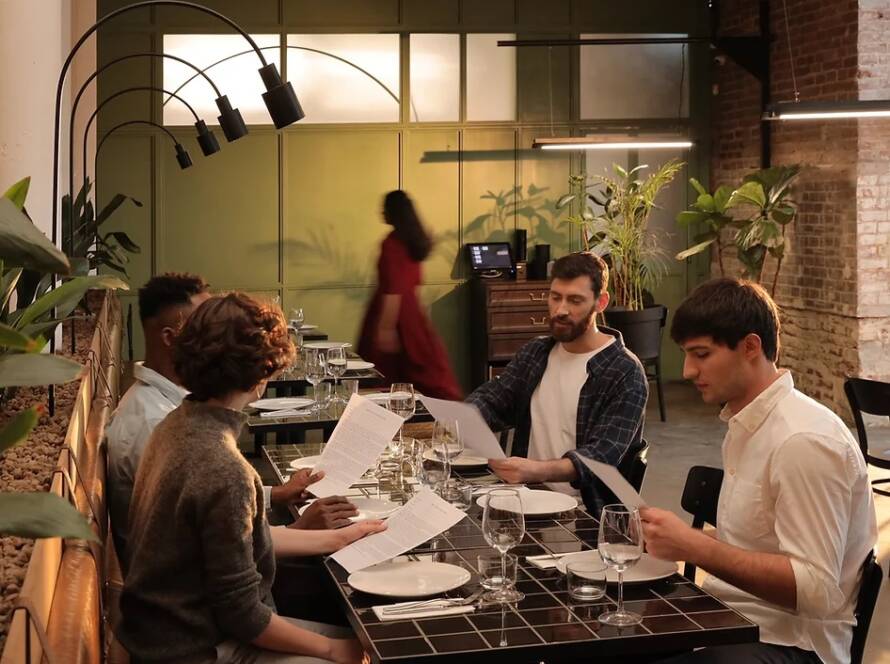
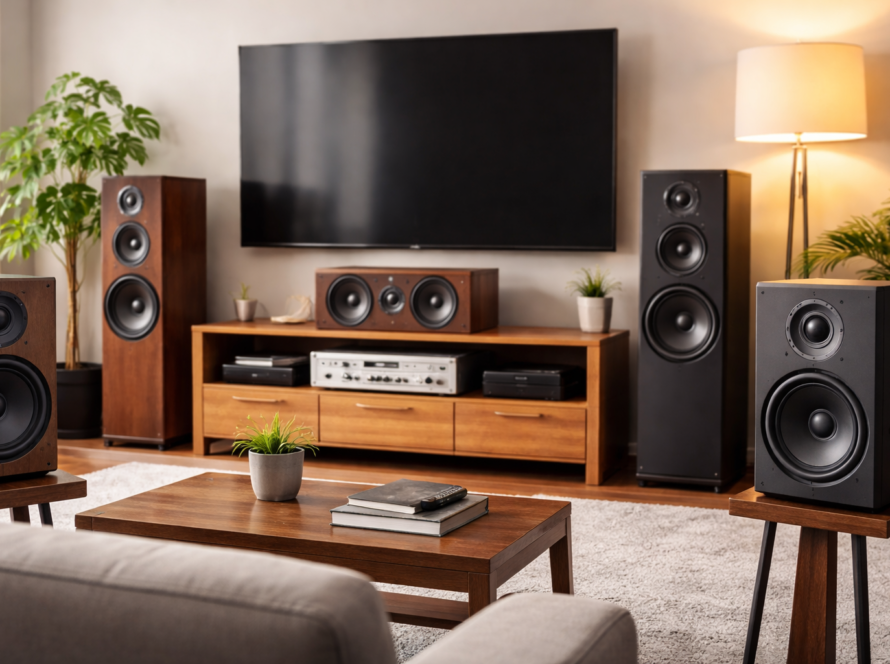
Wondering about home speakers versus commercial speakers for your restaurant? The short answer: you can use home speakers in a small, quiet space for a while. But a working venue that plays music all day really needs commercial speakers. They last longer, spread sound more evenly, and cope with continuous use that home speakers simply cannot handle.
The Short Answer
Home and hi-fi speakers aim for rich sound from one listening position, over a few hours at a time. A restaurant flips that completely: no single listening spot, tables across the whole room, and music from opening to close. Home speakers can just about cope in a tiny, quiet café corner. In most venues, though, they wear out faster and leave some tables too loud and others too quiet. Commercial speakers handle exactly this job, which is why hospitality relies on them.
Where Home Speakers Fall Short in a Venue
The gap shows up in a few practical ways. A restaurant plays music for ten to fourteen hours a day, far more than home speakers can take. Heat and long hours then wear them out. Home speakers also aim sound at one spot, such as a sofa. Spread tables across a room, and you get loud patches near the speakers and dead zones between them. They rarely support the 100V line systems that let many speakers share one cable at even levels. That makes them hard to distribute and zone. On top of that, their bulky cabinets are tricky to place cleanly in a designed interior.
What Commercial Speakers Add
Commercial speakers suit the venue, not the living room. They run for long daily shifts without complaint. For even coverage, they use several smaller ceiling or wall speakers on a 100V line. That beats one or two big boxes in a busy room. Every table then hears a similar, comfortable level. Zoning lets the dining room, bar, and patio each run at their own volume. Many models add weatherproof options for patios and discreet ceiling designs that vanish into the room. This is the same logic that separates consumer and commercial speaker brands in the first place.
When Home Speakers Are Actually Fine
To be fair, home speakers are not always the wrong answer. Picture a very small, quiet space with only a few hours of music a day. A good pair of home speakers can get you going, and it suits a tight startup budget. Problems usually appear later. As the venue gets busier, the hours stretch, or you add a second area, the uneven sound starts to show. A proper commercial system then becomes the sensible upgrade.
The Verdict
Beyond a tiny, quiet space or a short-term setup, commercial speakers pay for themselves. The return is simple: reliability and even sound with no loud or dead spots. You also avoid replacing burnt-out speakers every year. Planning a new fit-out? It pays to design the audio properly from the start. Our restaurant sound system guide walks through how, and you can ask for a layout matched to your space.
Frequently Asked Questions
Can I use home speakers in my restaurant?
You can, in a small and quiet space for a short time, but it is not ideal for a working venue. Home speakers handle a few hours of listening from one spot, not all-day playback across a room full of tables. For anything beyond a tiny café corner, commercial speakers are the more reliable choice.
Will home speakers get damaged in a restaurant?
They can, over time. Playing music for ten to fourteen hours a day pushes home speakers well past what they can handle. The heat and constant load then wear them out or cause failures. Commercial speakers handle this kind of continuous daily use, which is a large part of what you pay for.
What makes commercial speakers different from home speakers?
Commercial speakers handle continuous daily use and cover a whole space evenly. They use several smaller speakers on a 100V line, rather than one or two large ones. Weatherproof options for patios and discreet ceiling or wall designs are common too. Home speakers focus on rich sound for one listening position instead.
Are commercial speakers worth the extra cost?
For a venue that plays music every day, usually yes. The value shows up as reliability and even sound, with no loud or dead spots. You also skip replacing burnt-out home speakers every year. In a very small, quiet space with light use, the gap is smaller.
Can I mix home and commercial speakers?
It is possible but rarely the best plan. Mixing them tends to give uneven sound and volume across the space. The home speakers also stay the weak point for daily use. One properly matched commercial system is usually cleaner, especially where you want even coverage or multiple zones.